Your native stack still runs the service
FastAPI and SQLAlchemy stay under pyfly, Laravel and Eloquent under larafly. Those libraries route and validate requests, run queries, and commit transactions.
Firefly Framework is open source and covers Java, Python, PHP, Rust, and .NET. Its frameworks build on stacks your teams run: Spring Boot, FastAPI, Laravel, Axum, or ASP.NET Core.
Why teams adopt it
Every service needs composition, persistence conventions, messaging, multi-step processes, resilience, identity, and operations. With the native stack alone, that wiring is your teams’ code, and it differs from service to service.
FastAPI and SQLAlchemy stay under pyfly, Laravel and Eloquent under larafly. Those libraries route and validate requests, run queries, and commit transactions.
On one framework, services use the same command and query dispatch and the same event contract. All five frameworks run multi-step operations as compensating sagas.
Your code holds the domain logic, the permission rules, and the compensating actions. The database and the message broker are your team’s choice.
Frameworks by language
Each framework follows its language’s conventions and has its own modules. A shared name doesn’t mean the same features, so each page lists what its framework provides.
Java
Spring Boot 3.5 · WebFlux · Java 25
jafly comes as modules a service adds as needed: commands and queries, orchestration for sagas and try-confirm-cancel, reactive transactions, and observability.
Explore jafly
Python
Starlette or FastAPI · Python 3.12+
pyfly adds typed dependency injection, CQRS handlers, and sagas to async services, with SQLAlchemy repositories and server-rendered HTML.
Explore pyfly
PHP
Laravel 13 · PHP 8.3+
larafly compiles PHP attributes for components, transactions, and security rules. It adds CQRS, a transactional outbox, sagas, and event sourcing.
Explore larafly
Rust
Tokio · Axum · Rust 1.88+
rsfly gives Rust services dependency injection, typed CQRS dispatch, compensating sagas, and SQLx repositories with explicit not-found and optimistic-lock results.
Explore rsfly
C# / .NET
ASP.NET Core · .NET 10
netfly validates and dispatches commands, coordinates attribute-based sagas, and returns structured HTTP errors. It registers through the host’s own dependency injection.
Explore netflyHow an application is built
All five frameworks share this design and fill its blocks with their own modules and integrations.
Business rules, entities, and use cases live here, with no transport or provider code.
The framework’s modules dispatch commands and queries and publish events around the domain.
HTTP controllers and event consumers turn each request into a command or a query.
Configuration picks the adapters that reach external services and brokers through shared contracts.
Repositories sit between the domain and the databases your team picks and configures.
Graphite: your domainAmber: application capabilitiesIvory: application boundariesSteel: system integrationsSlate: data and infrastructure
Beyond the frameworks
Firefly Forge turns a product brief into verified pyfly or larafly software. Coding agents work on bounded tasks, and every check leaves a record.
Explore Firefly ForgeFirefly Agentic is a Python library for agents with tools, memory, and retrieval on Pydantic AI. Your application collects approvals or denials for marked tools.
Explore Firefly AgenticBuilt on pyfly, Firefly Weave runs business processes across your systems and people. A run waits for approvals and events and records its steps.
Explore Firefly WeaveEvaluate it
The repositories are public on GitHub under their own licenses, and every framework except netfly publishes releases. Four books, in English and Spanish, PDF and EPUB, build the jafly, pyfly, larafly, and rsfly samples.
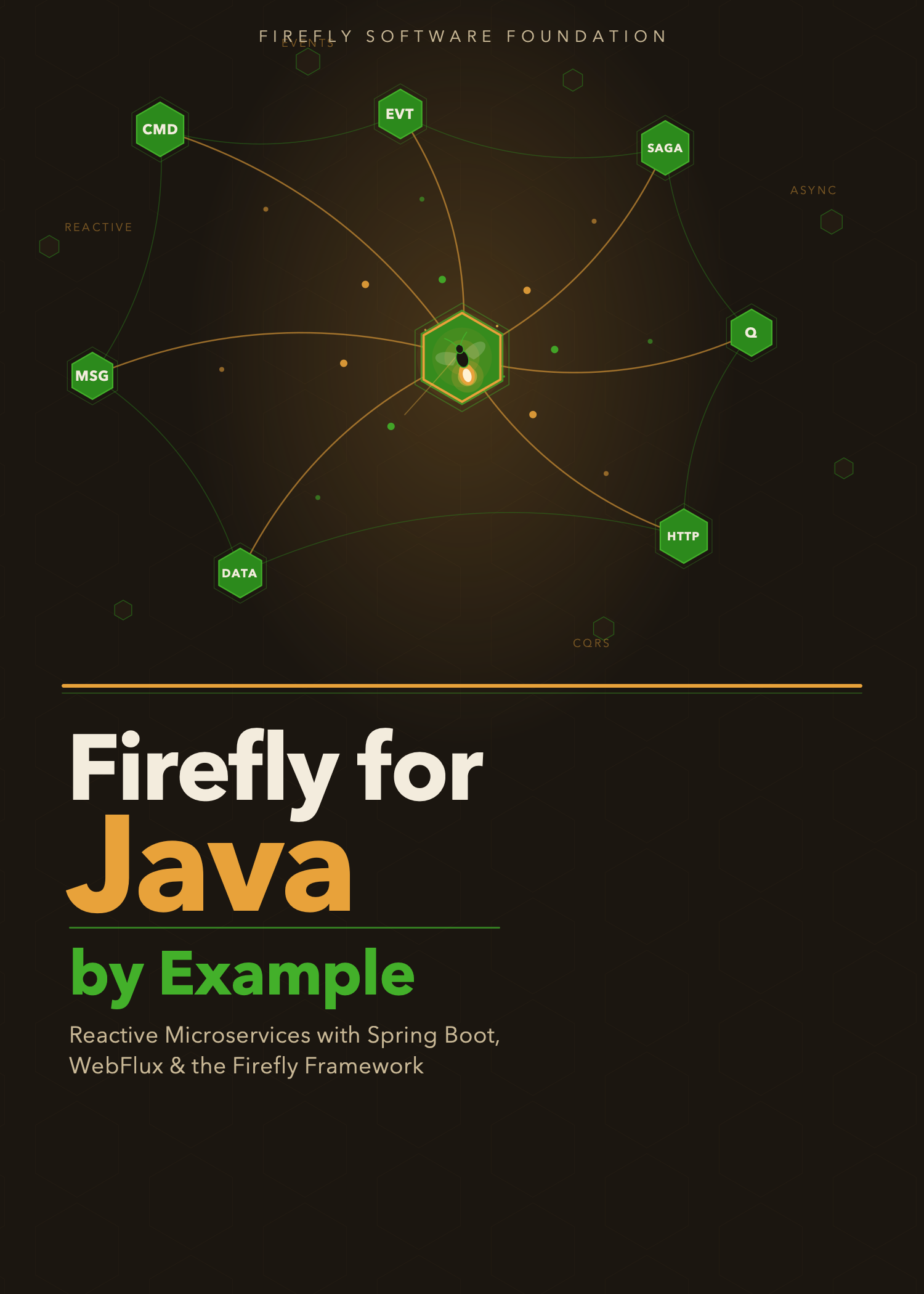
Follows Lumen Lending, a personal-loan origination service, from reactive APIs to orchestration.
Read about the book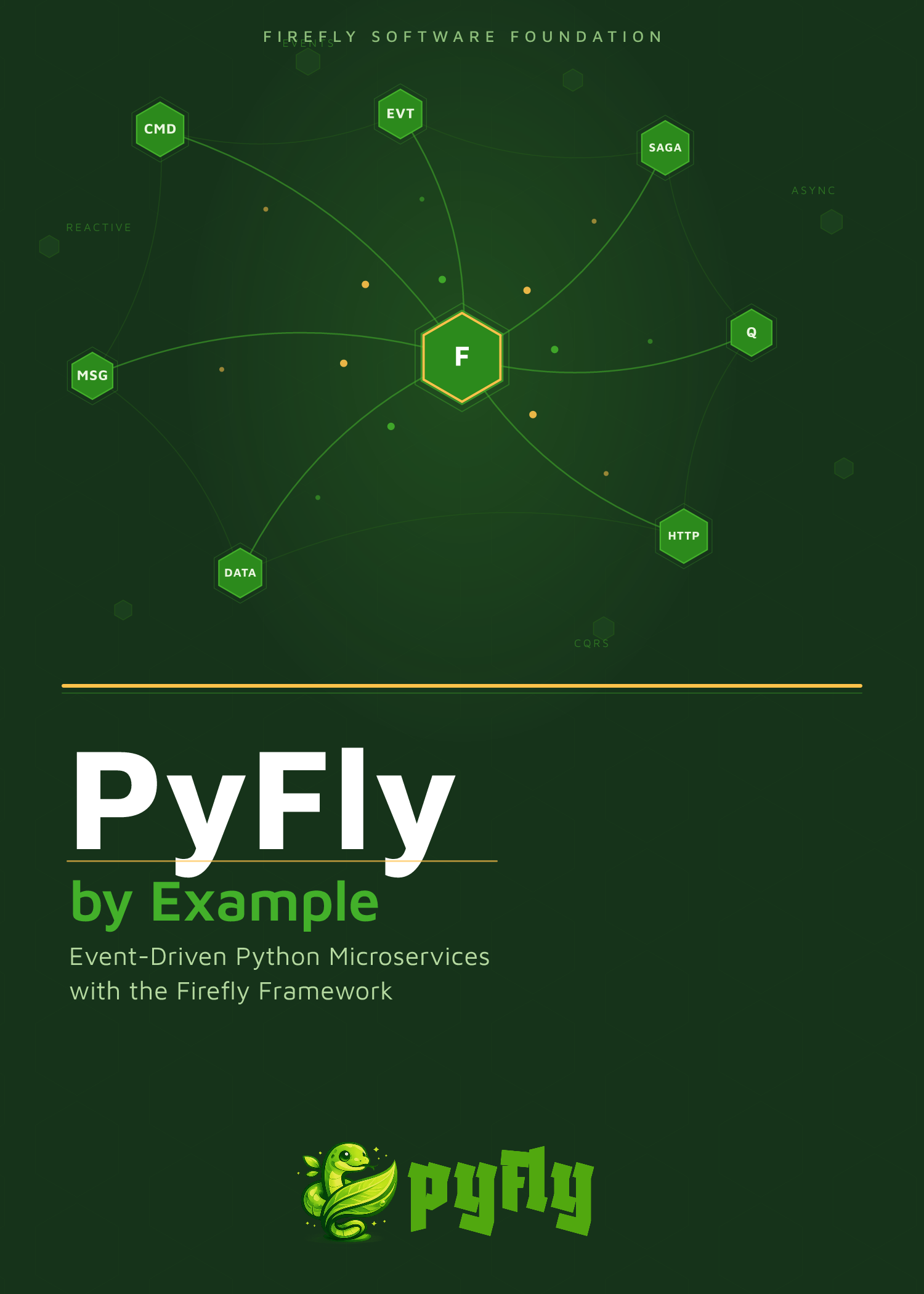
Builds the Lumen wallet and ledger service, with an appendix on server-rendered HTML and forms.
Read about the book
Takes the Lumen wallet service on Laravel from HTTP endpoints to the transactional outbox.
Read about the book
Composes Lumen Ledger from typed services on Tokio, Axum, and SQLx, with events and persistence.
Read about the bookWho maintains it
Its projects kept settling the same questions: where a business area ends, and how services call one another. The Firefly Software Foundation maintains the frameworks, and Firefly Software builds its services on them.
Read the storyFirst step
Pick the framework for its language and run its sample application. Each framework’s documentation walks through the first request.